The Science of Home Fermentation for Gut Health and Flavor
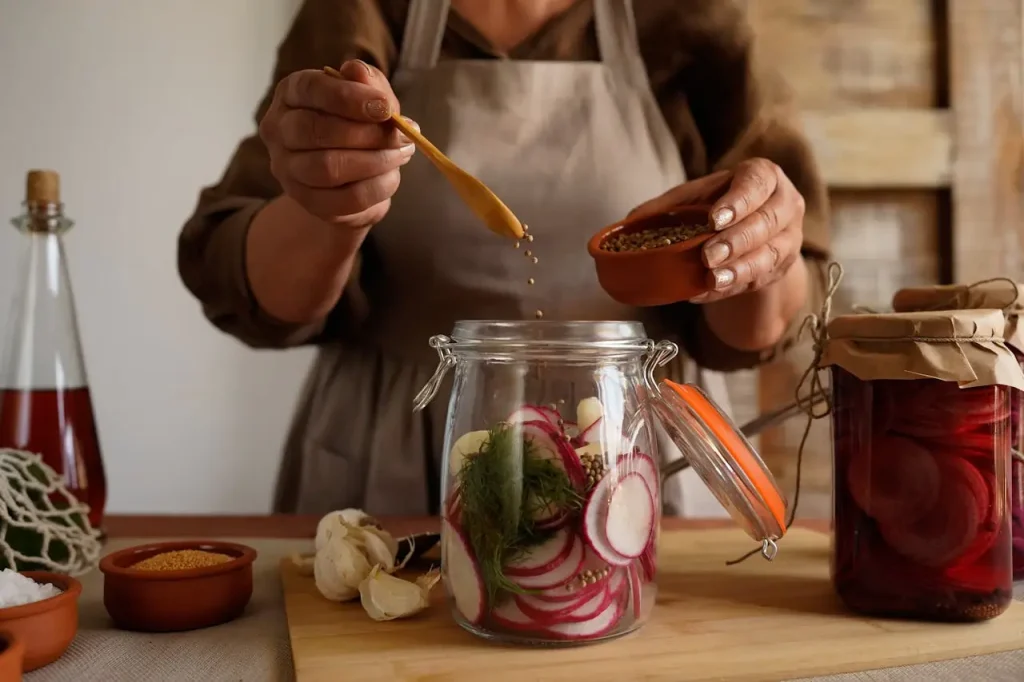
You know that feeling when you open a jar of homemade sauerkraut? That sharp, tangy scent that hits your nose—it’s alive. Honestly, that’s not just poetic. It’s literal. Inside that jar, a silent, microscopic party has been happening, transforming humble cabbage into a crunchy, probiotic powerhouse. And the best part? You’re the host.
Home fermentation isn’t some new-age fad. It’s one of humanity’s oldest food preservation tricks, now backed by modern science for its stunning benefits for our gut and our taste buds. Let’s dive into the beautiful, bubbling world where biology meets your kitchen counter.
Why Your Gut Is Begging for Fermented Foods
Think of your gut microbiome as a bustling, diverse city. Trillions of bacteria—good and bad—live there. When the good guys thrive, they help digest food, synthesize vitamins, and crucially, they talk to your immune system. A lot of our modern diets, well, they don’t always support that city. Processed foods, stress, antibiotics… they can throw things out of whack.
Here’s where fermentation comes in as the ultimate urban planner. Fermented foods are teeming with live, beneficial bacteria (probiotics) and the food they love to eat (prebiotics). When you eat them, you’re sending in reinforcements. These microbes take up residence, helping to crowd out less helpful strains and producing compounds like short-chain fatty acids that reduce inflammation. It’s a direct line from your mason jar to a happier, healthier gut.
The Key Players: Lacto-Fermentation 101
Most home ferments rely on lacto-fermentation. The name comes from Lactobacillus, a family of friendly bacteria that are the real workhorses here. They’re everywhere—on the surface of fruits and vegetables, even floating in the air of your kitchen.
The process is elegantly simple. You submerge vegetables in a salty brine (or massage salt into them to draw out their own water). This saltwater environment is a selective gatekeeper. It inhibits the growth of spoilage-causing microbes but allows the salt-tolerant Lactobacillus and its cousins to flourish.
These bacteria then get to work, feasting on the natural sugars in the food. As they digest, they produce lactic acid. This acid is the magic preservative and flavor-maker. It lowers the pH, making the environment increasingly inhospitable to dangerous pathogens, while creating that signature tang we love. The food is, in a sense, partially pre-digested by the bacteria, which can make its nutrients more bioavailable for us.
Flavor Alchemy: More Than Just Sour
Sure, you get sour. But if that’s all you’re tasting, you’re missing the symphony. Fermentation builds umami, that deep, savory fifth taste. It develops complex, funky notes you’d never get from a raw vegetable. A plain cucumber becomes a nuanced, garlic-dill pickle. Cabbage transforms from bland to a layered, almost apple-like kraut.
This flavor development is due to microbial metabolites—the various acids, alcohols, and esters produced during fermentation. It’s a slow-cooked story told by microbes. Each batch is a unique snapshot of your kitchen’s ecosystem, the temperature, and the time. That’s the art within the science.
Getting Started: Your First Ferment
Intimidated? Don’t be. You need very little. Here’s a basic roadmap for a vegetable ferment like sauerkraut or carrots.
- Vegetables: Start with something dense and fresh. Cabbage, carrots, radishes, green beans. Organic is best, as pesticides can hinder microbial activity.
- Salt: Use a non-iodized salt like sea salt or kosher salt. Iodine can, you know, also interfere with fermentation. A good rule of thumb is 2% salt by weight of the vegetables + any water. For a brine, a 2-5% solution is typical.
- Equipment: A clean jar, a weight to keep the veggies submerged (a smaller jelly jar works), and a way to let gas escape. A simple cloth-covered jar is fine for short ferments; an airlock lid is nice for longer ones.
- Process: Chop or shred your veg, mix with salt, pack it tightly into the jar, and ensure everything is under the brine. Any bits exposed to air can mold.
Then, you wait. Store it at cool room temperature (60-75°F is ideal). In a few days, you’ll see bubbles—a great sign! Taste it after a week. Like it? Move it to the fridge to slow the fermentation way down. Want it tangier? Let it go longer.
Troubleshooting: Reading the Signs
Things can look… weird. Here’s a quick guide to what’s normal and what’s not.
| What You See | What It Probably Is | Action |
| Cloudy brine, bubbles | Perfectly normal! Signs of active fermentation. | Celebrate. Carry on. |
| White, creamy sediment at bottom | Spent yeast cells (often called “kahm yeast”). Harmless but can affect taste. | Skim off if you like, or just stir it in. |
| White, fuzzy patch on the surface | Mold. Different from the flat, white kahm yeast. | Scoop out an inch around and below it if the ferment is very acidic. If unsure, or if it’s colorful, toss the batch. |
| Unpleasant, putrid smell | Spoilage. Trust your nose. A funky, tangy smell is good; a rotting smell is not. | Compost it. Check your salt ratio and ensure everything was submerged. |
Beyond Kraut: The Fermented World Awaits
Once you’ve got the basics, a whole universe opens up. Honestly, it’s addictive.
- Hot Sauce: Ferment chili peppers, garlic, and fruit for a flavor no store-bought sauce can touch.
- Kombucha: A fermented tea drink powered by a SCOBY (Symbiotic Culture Of Bacteria and Yeast). It’s effervescent, tart, and endlessly flavorable.
- Fermented Salsas & Chutneys: Add depth and probiotic punch to your condiments.
- Dairy Kefir: Using kefir grains, you can transform milk into a tart, drinkable yogurt-like probiotic beverage in about 24 hours.
The point is, you’re not just making food. You’re cultivating life. You’re participating in an ancient cycle that connects your health directly to the invisible, microbial world. In an age of sterile, packaged perfection, there’s something profoundly satisfying about embracing a little controlled wildness in your own home.
So, grab a jar, some salt, and a vegetable. Start a quiet, bubbling experiment on your countertop. Your gut—and frankly, your sandwiches—will thank you.