
Wildfire-Resistant Roofing for Defensible Space
You know that sinking feeling when you watch the evening news and see another wildfire tearing through a hillside? It’s not just the footage that gets you—it’s the thought of your own home, your own roof, your own little slice of safety. Here’s the thing: in the world of wildfire defense, your roof isn’t just a cover over your head. It’s the first line of defense, the frontline soldier, the thing standing between your living room and a shower of embers. And honestly, most people don’t think about it until it’s too late.
Let’s talk about defensible space. You’ve probably heard that term thrown around by your insurance agent or the local fire department. It’s that buffer zone you create between your home and the wildland around it. But here’s the kicker—defensible space isn’t just about clearing brush and trimming trees. It’s about the materials your home is made of, starting from the top down. Because when a firestorm hits, it’s not the flames that usually get you. It’s the embers. Thousands of them, flying miles ahead of the fire, landing on your roof like a bad omen.
Why Your Roof Matters More Than You Think
Think of your roof as a giant catcher’s mitt. During a wildfire, it’s going to catch everything the wind throws at it—pine needles, leaves, and most critically, burning debris. If your roof is made of flammable materials, well, you’re essentially inviting the fire in. The National Fire Protection Association (NFPA) has been shouting this from the rooftops (pun intended) for years: in high-risk areas, the roof is the most vulnerable part of your home’s exterior.
And it’s not just about direct flame contact. Radiant heat from a nearby fire can ignite certain roofing materials without a single flame touching them. Plus, those pesky embers can slip into tiny gaps and crevices—under shingles, into gutters, through vents—and start a fire from the inside out. It’s sneaky, it’s fast, and it’s devastating.
The Ember Problem: A Quick Reality Check
Here’s a stat that might make you pause: during the 2018 Camp Fire in California, studies showed that the vast majority of homes that burned were ignited by embers, not by the main fire front. These glowing little devils can travel over a mile ahead of the flames. They land, they smolder, they ignite. And if your roof has even a small vulnerability—a cracked shingle, an exposed underlayment, a debris-filled gutter—that’s all it takes.
So what’s the solution? Well, it starts with choosing the right roofing material. But it doesn’t end there. Let’s break it down.
Class A, B, C: What Do Those Ratings Actually Mean?
Before you go shopping for a new roof, you need to understand fire ratings. It’s not just marketing fluff—it’s a standardized testing system. The ratings go from Class A (the best) down to Class C (the bare minimum, and honestly, not great for wildfire zones).
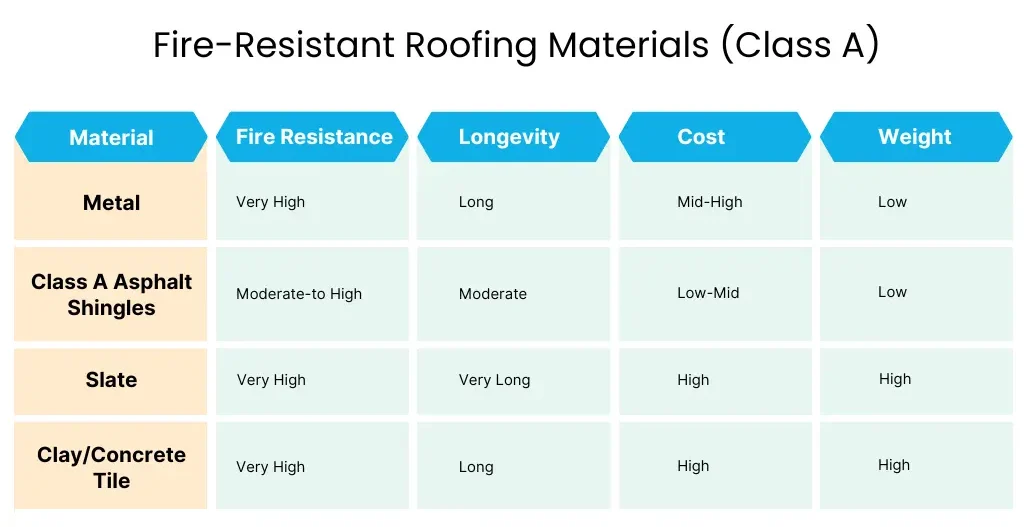
Class A roofing can handle severe fire exposure. It’s the gold standard for wildfire-prone areas. These materials are typically non-combustible or have special fire-retardant treatments. Think clay tiles, concrete tiles, metal, and some high-end composite shingles.
Class B roofing can handle moderate fire exposure. It’s better than nothing, but if you’re in a high-risk zone, you’re still playing with fire—literally.
Class C roofing is for light fire exposure. It’s the minimum code requirement in many areas, but it’s not enough for defensible space. Wood shakes and untreated shingles often fall into this category, and they’re a big no-no in wildfire country.
Here’s the deal: if you live in a wildfire-prone area, you want Class A. Period. It’s non-negotiable. Your insurance company might even give you a discount for it, which is a nice little bonus.
Top Roofing Materials for Wildfire Resistance
Alright, let’s get into the good stuff. What are your options? I’ll walk you through the most common Class A materials, along with their pros and cons, so you can make an informed decision. And hey, I’ll throw in some real-talk about costs and aesthetics, because let’s be honest—you don’t want a roof that looks like a bunker.
Metal Roofing: The Modern Workhorse
Metal roofs have been gaining popularity for years, and for good reason. They’re durable, they last 50+ years, and they’re naturally fire-resistant. Steel and aluminum are non-combustible, meaning they won’t ignite. That’s a huge win.
But wait—there’s a catch. Metal roofs can be prone to corrosion in coastal areas, and they can be noisy during rain (though modern underlayment helps with that). Also, they can dent from hail. But for wildfire defense? They’re excellent. Just make sure the fasteners and clips are also metal, not plastic or rubber, because those can melt.
One thing to note: metal roofs can be slippery when wet, so if you ever need to walk on them, you’ll need proper safety gear. But honestly, that’s a minor detail compared to the peace of mind they offer.
Clay and Concrete Tiles: The Classic Heavyweight
If you want a roof that looks like it belongs in a Mediterranean villa, clay or concrete tiles are your best bet. They’re heavy, they’re durable, and they’re Class A. These materials are non-combustible, and they offer excellent thermal mass, which helps regulate your home’s temperature.
The downsides? Weight. These tiles are heavy, and your roof structure may need reinforcement to support them. That can add to the cost. Also, they can be brittle—walking on them can crack them, and hail can cause damage. But for wildfire resistance, they’re top-tier.
Another thing to consider: the installation is labor-intensive, which means higher upfront costs. But if you’re building a forever home, it might be worth the investment.
Asphalt Shingles: The Budget-Friendly Option (With a Twist)
Asphalt shingles are the most common roofing material in the US, and they’re not all created equal. Standard asphalt shingles are usually Class C, which isn’t great. But here’s the twist—you can get Class A asphalt shingles that are specifically designed for fire resistance. They’re made with fiberglass mats and special fire-retardant coatings.
These upgraded shingles are a solid middle-ground option. They’re more affordable than metal or tile, they come in a variety of colors, and they’re relatively easy to install. The downside? They don’t last as long as metal or tile—usually 20-30 years—and they can be damaged by severe weather.
But here’s the thing: if you’re on a budget and you need to upgrade your roof for wildfire safety, Class A asphalt shingles are a million times better than the old Class C ones. Don’t let perfect be the enemy of good.
Avoid These Materials Like the Plague
Let’s talk about what NOT to use. Wood shakes are the classic California dream roof—beautiful, rustic, and absolutely terrible for wildfire defense. Even with fire-retardant treatments, they can ignite and burn. Same goes for untreated cedar shingles. And if you have an older roof with these materials, it’s time to start planning a replacement.
Also, be wary of synthetic shingles that look like wood or slate but are made of plastic or rubber. Some of them are Class A rated, but others aren’t. Always check the label. And remember, the rating is for the material itself—the installation matters too. A Class A roof installed poorly is just a fire hazard with a fancy sticker.
Beyond the Material: Installation and Maintenance Matter
Okay, so you’ve picked a great Class A material. You’re feeling good. But hold on—the work isn’t done. A wildfire-resistant roof is only as good as its installation and maintenance. Here’s what you need to know.
Seal Every Gap and Crevice
Embers are tiny. They can fit into spaces you didn’t even know existed. That means you need to seal every gap where the roof meets the walls, where the chimney penetrates the roof, and around any vents or skylights. Use fire-resistant sealants and flashing. It’s tedious work, but it’s the difference between a minor ember landing and a full-blown house fire.
Gutters: The Hidden Fire Hazard
You know what collects leaves, pine needles, and dry debris? Your gutters. And what happens when those dry materials catch fire? Your roof edge catches fire. It’s a chain reaction. So, clean your gutters regularly, especially during dry season. Or better yet, install gutter guards that prevent debris from accumulating. Some people even install metal gutters with a slight slope to reduce buildup. It’s a small investment that pays off big.
Ventilation: The Weak Spot You Forgot
Your attic vents are necessary for airflow, but they’re also entry points for embers. You need to install metal mesh screens with openings no larger than 1/8 inch. This keeps embers out while still allowing ventilation. It’s a simple fix that many homeowners overlook.
The Cost Factor: Is It Worth It?
Let’s be real—replacing a roof is expensive. We’re talking anywhere from $10,000 to $30,000 or more, depending on the size of your home and the material you choose. That’s a big chunk of change. But here’s the way I look at it: it’s an insurance policy that pays off every single day you don’t have a fire.
And there are financial incentives. Many insurance companies offer discounts for Class A roofs in wildfire-prone areas. Some states have grant programs or tax credits for fire-hardening your home. Plus, a new roof increases your home’s resale value. So it’s not just an expense—it’s an investment.
But more than the money, think about the peace of mind. When the next red flag warning comes through, you’ll be able to sleep a little easier knowing your roof isn’t going to betray you.
Putting It All Together: Your Defensible Space Plan
Your roof is just one piece of the defensible space puzzle. You also need to manage the vegetation around your home, maintain a 5-foot


